
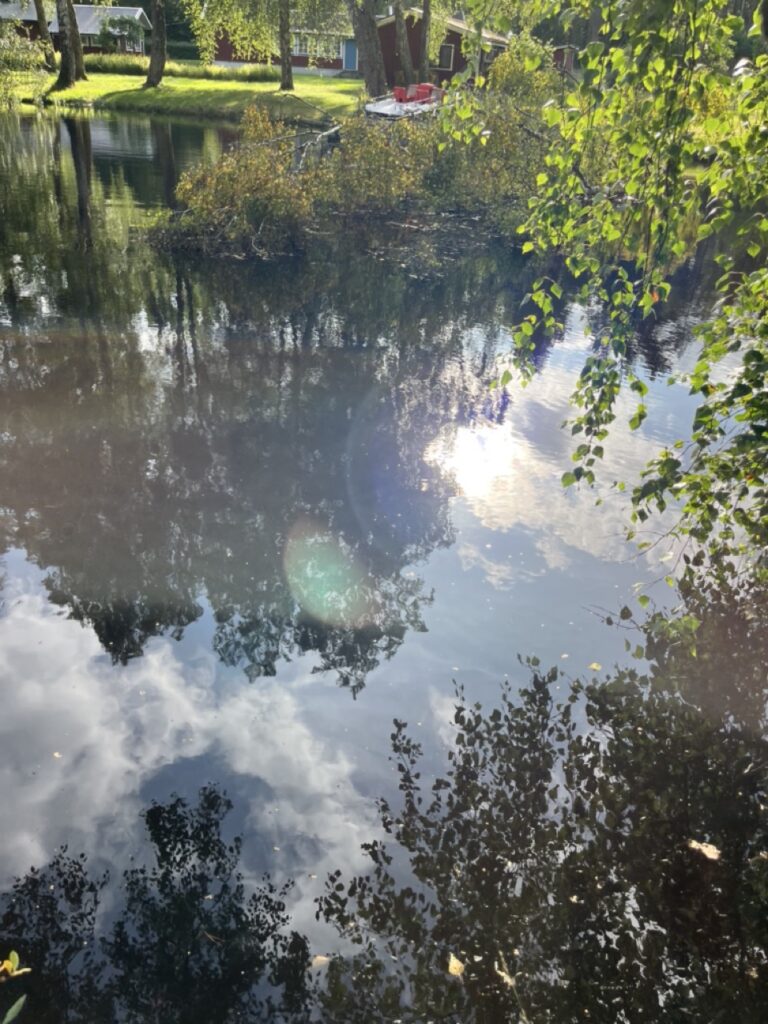
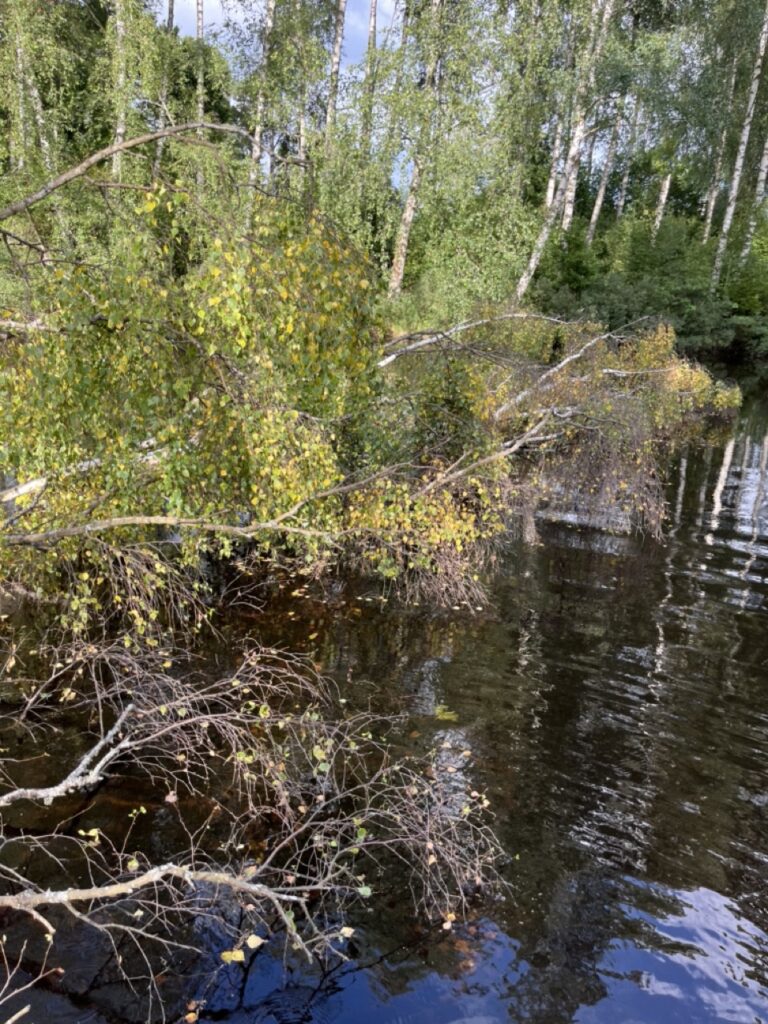
On July 25, a neighbour called with the helpful news that a large shore birch had cracked in a summer storm and fallen straight into the lake. Unfortunately, the tree had chosen a particularly strategic position, completely blocking access to the shoreline making it impossible for small boats to pass. Nature, it seemed, had briefly redesigned the bay without asking.
Two days later, on Sunday, July 27, I went to inspect the situation in person. The birch turned out to be impressively large, with a stem diameter of around 35 centimetres, and it stretched across the bay almost to the opposite shore. What had looked like a minor inconvenience from a distance was, up close, a rather effective natural dam.
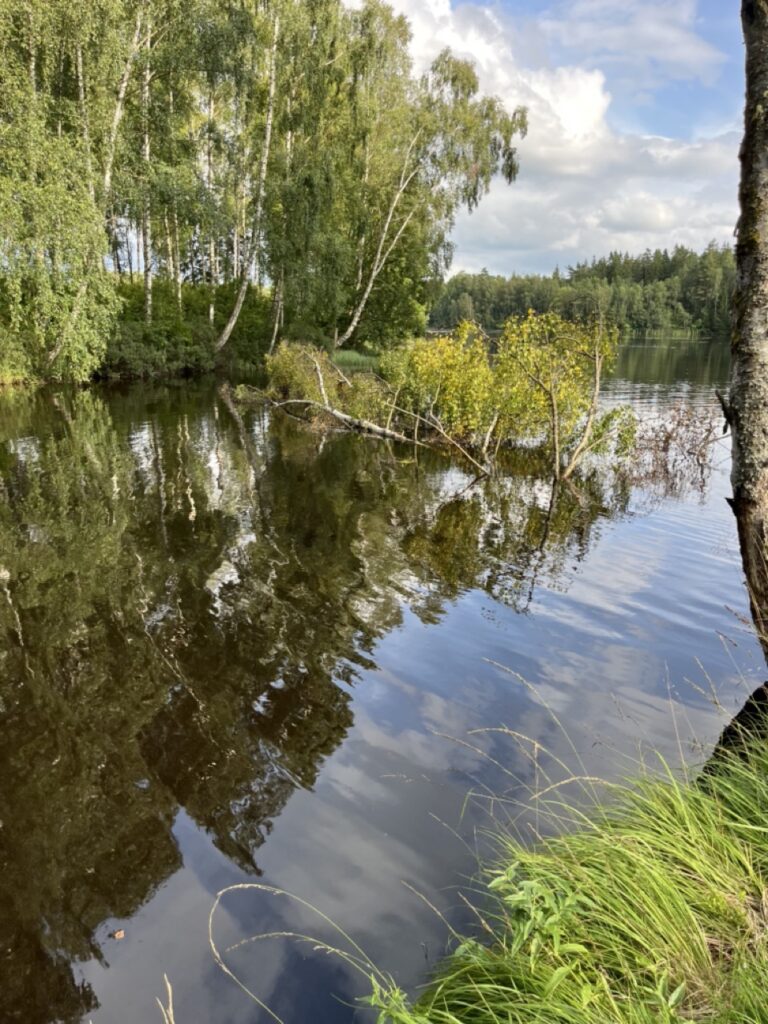
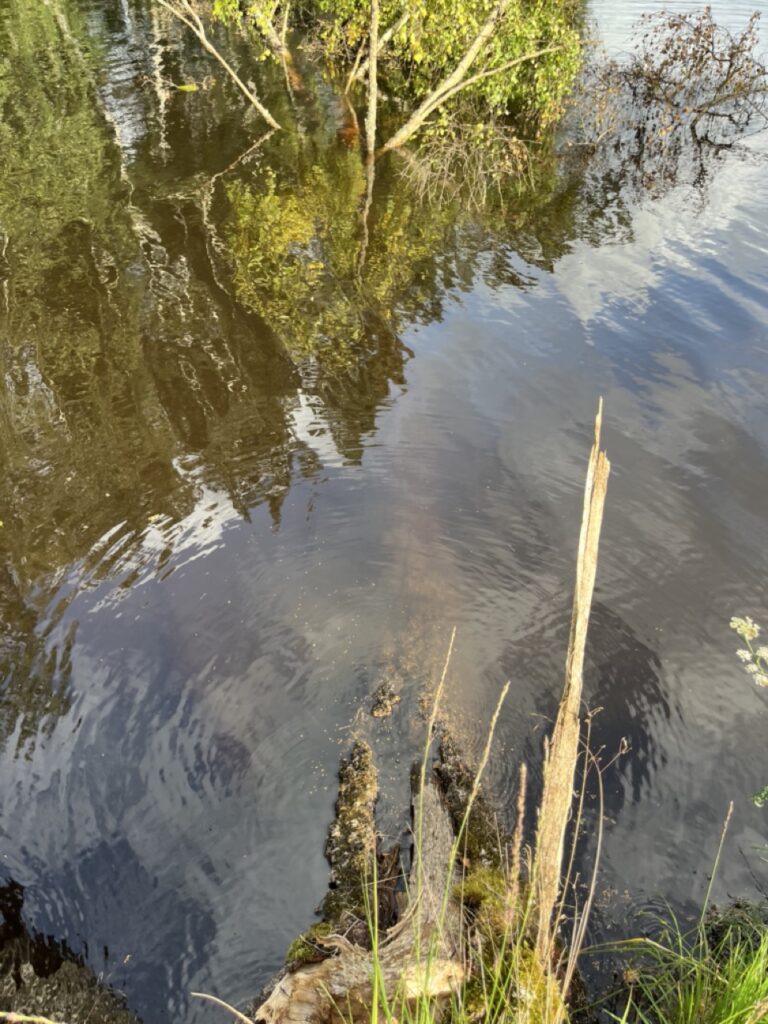
Work began on Monday with what might generously be described as “simple tools”: a hand saw and a certain amount of optimism. Branch by branch, the tree was dismantled — first while carefully balancing on the trunk itself, and later while standing in water reaching up to my chest. Since parts of the stem were submerged, I cut it into roughly one-metre sections by hand, leaving only the final three metres, which by then felt almost personal.
The remaining trunk was clearly not impressed. Using a winch, I pulled it parallel to the shoreline in the hopeful belief that it might be lifted out of the water. This belief turned out to be misplaced. The trunk stayed exactly where it was, clearly confident in its superior weight and position.
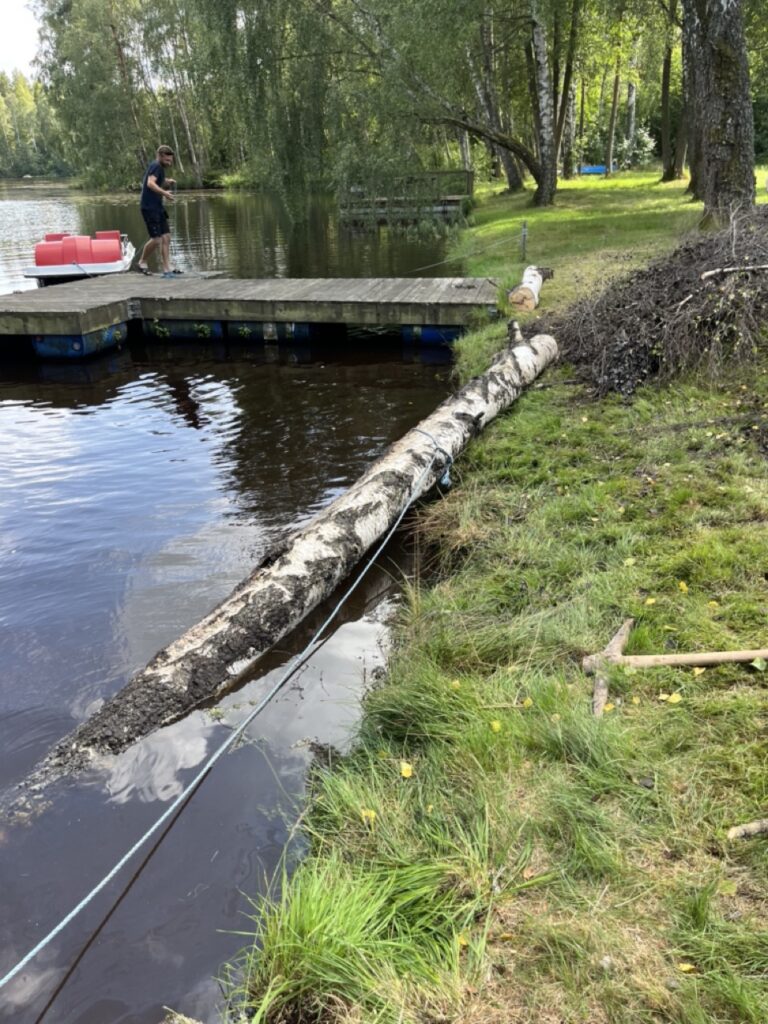
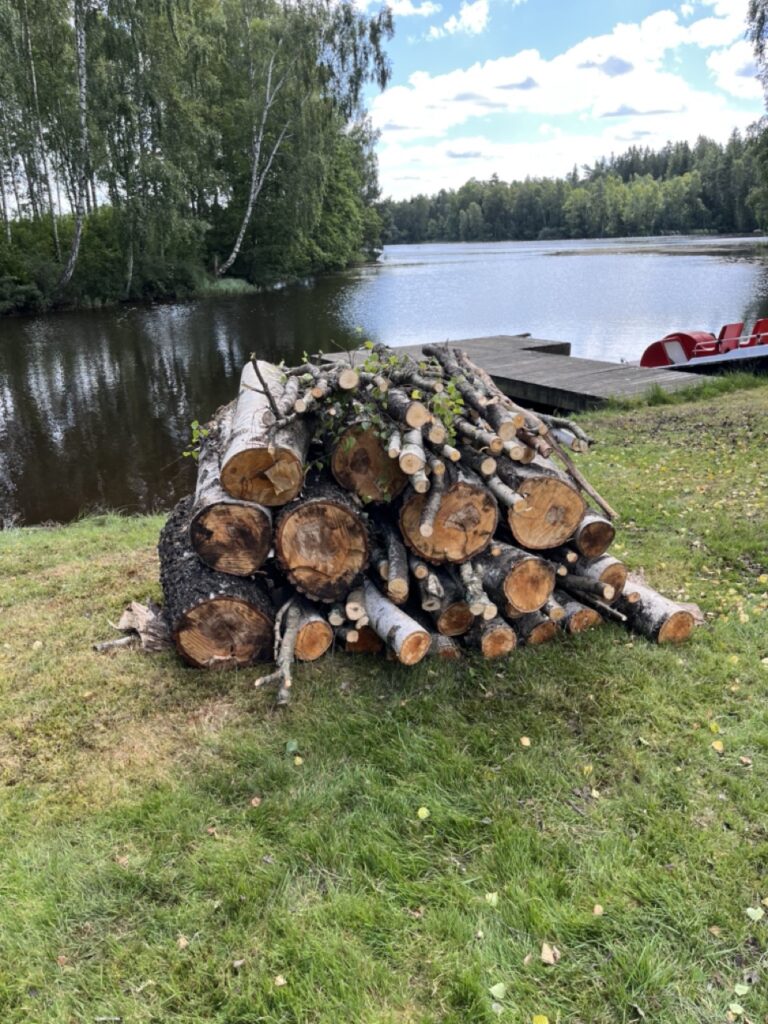
The next day, with help from the neighbour and a chainsaw, reason finally prevailed. The last section was cut into smaller pieces that could be lifted out manually. After stacking the wood and cleaning up the shoreline, access to the lake was restored. Mission accomplished — with sore muscles, a tidy shore, and renewed respect for both summer storms and fallen birches at Björkesö.